
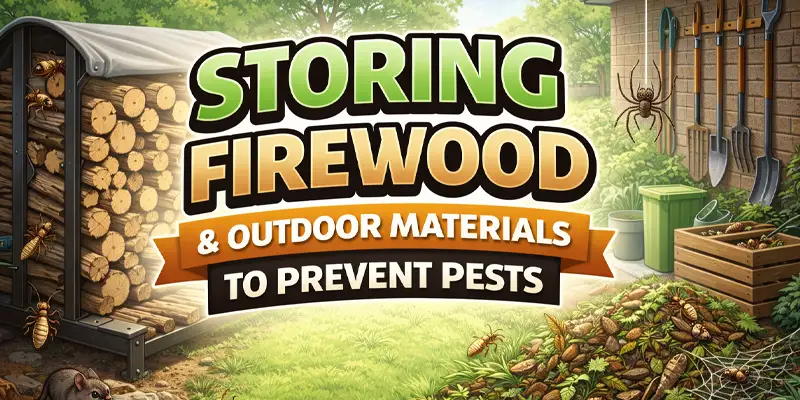
Not only does a well-maintained yard increase curb appeal, it protects your home from unwanted pests. Insects, rodents, and other wildlife seek shelter in firewood piles, leaf debris, and outdoor materials such as lumber or gardening supplies. You can still have these items; they just need to be properly stored.
Here’s a look at how you should store firewood and outdoor materials safely to reduce the risk of pest issues around your Mesa home.
Importance of Proper Storage
Pests such as termites, ants, spiders, mice, and rats like to hide in cluttered, damp, or shaded areas. That’s why they love firewood and yard debris so much. From food to shelter to moisture, these areas give them access to everything they need for survival.
Once they set up shop in your yard, it’s only a matter of time before they make their way into your home. Once inside, they can multiply quickly, leading to costly and time-consuming removal efforts.
By organizing and storing outdoor materials correctly, you create a less inviting environment for pests.
How to Store Firewood
Due to its organic, moist composition, insects such as termites and ants are drawn to piles of firewood, especially since it’s partially buried in soil.
1. Keep Firewood Off the Ground
Don’t stack firewood directly on soil or grass. Instead, elevate the pile with a wood rack or pallets. Keep six inches or more of clearance between the bottom of the wood stack and the ground. This will allow air to circulate underneath and prevent moisture buildup.
2. Keep Firewood Away From Your House
Don’t store firewood against your house, which will attract pests to your foundation or other entry points. Store wood at least 20 to 30 feet away from your home so it’s not touching siding, doors, windows, or vents.
3. Stack Firewood Properly
Proper stacking helps wood dry out and discourages pests. Stack in a single row or loosely piled to allow air to circulate. Avoid large, compact piles where insects can live. You may want to cover the top with a tarp—just be sure to leave the sides open so the area can ventilate.
Managing Yard Debris and Organic Waste
When left in piles, leaves, branches, and yard trimmings hold moisture and create shaded environments that pests love.
That’s why you should regularly rake up fallen leaves and small debris so they don’t harbor:
- Ants
- Earwigs
- Millipedes
- Slugs and snails
If you compost for your garden, place compost bins away from the house and turn the pile regularly to reduce moisture.
Properly house garden tools, unused lumber, pots, and equipment to keep exposure to a minimum. Ideally, store these items in a dry, well-ventilated shed, garage, or covered area.
Reduce clutter by organizing outdoor materials on shelves or hooks so they are off the ground.
Contact Frontino Pest Co.
Sometimes preventative measures aren’t enough. If pests continue to be a problem despite proper yard maintenance, contact us at 602-338-9223 for a professional inspection in Mesa that identifies pest entry points and recommends targeted solutions.
